The White Death of Dead Mountain
February 1959.
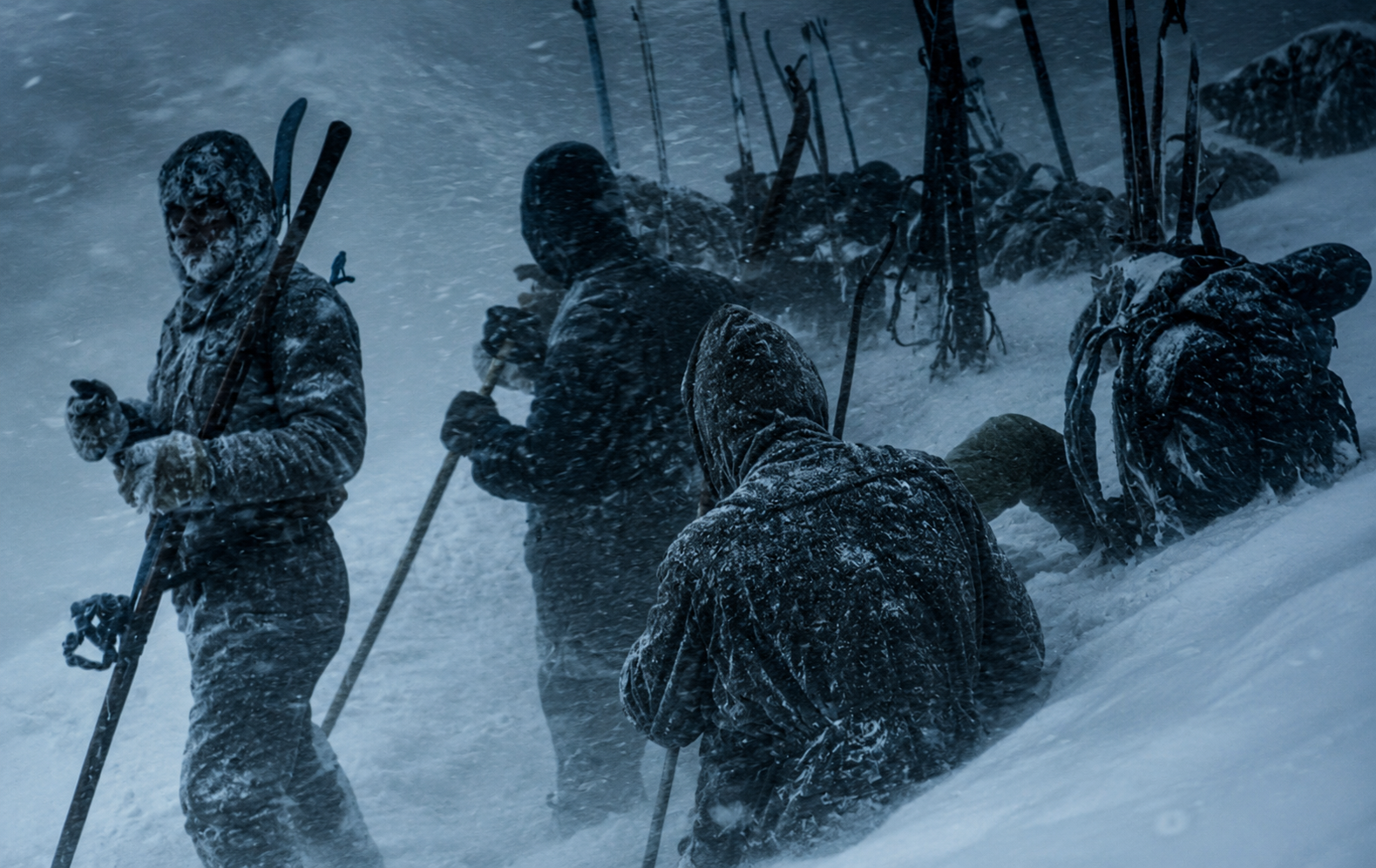
Deep inside the icy mountains of Soviet Russia, the wind felt different that night. It was so biting cold that breathing felt like swallowing fire. A half-moon hung in the sky, but its pale light could barely pierce the darkness of the snow-covered forest. Everywhere you looked, there was only white snow—endless, silent, and terrifying.
Igor Dyatlov pulled off his heavy gloves and stared at the map. His fingers were already trembling from the freezing cold. Behind him, his friends were busy setting up their tent. These were not amateur tourists; they were highly experienced, trained cross-country skiers and trekkers. Mountains were their second home. They loved the thrill of high-altitude adventures. But nothing they had faced before could prepare them for what was coming.
The mountain they were climbing was called Kholat Syakhl. In the local native language, it translated to a chilling name: “Dead Mountain.”
The Fatal Desicion
At first, it probably just sounded like an eerie tribal myth. But some names have a horrible way of becoming
The team was exhausted after a long, brutal day of trekking. The wind was picking up, screaming across the ridges. The temperature had dropped below $-30^\circ\text{C}$. At such extreme temperatures, the human brain begins to slow down, and survival becomes a battle of seconds.
Yet, the group remained cheerful. They were laughing, writing in their diaries, and taking photos. Later, when investigators found their cameras, it was these frozen smiles that would haunt the world.
To shield themselves from the wind, they decided to cut into the snowy slope and pitch their tent right there on the exposed mountainside. It was a tactical choice, but it was the one decision that changed everything.
Night fell, and the wilderness turned hostile.
The wind was no longer just blowing; it was howling like a trapped animal. Ice crystals slapped hard against the canvas of the tent. Inside, the trekkers had crawled into their sleeping bags. Someone made a joke. Someone talked about hot tea. Others planned what they would do once they returned home to warmth and safety.
And then… something happened.
What was it? That is the million-dollar question the world is still asking today.
Escape into The Freeze
The official inquiry suggests that a heavy slab of packed snow slipped from above—a slab avalanche. It wasn’t a massive, mountain-crushing avalanche, but it was heavy enough to crash onto the tent, trapping and injuring the hikers in the dark.
But simple fear of snow does not explain what happened next. The evidence left behind was completely unnatural.
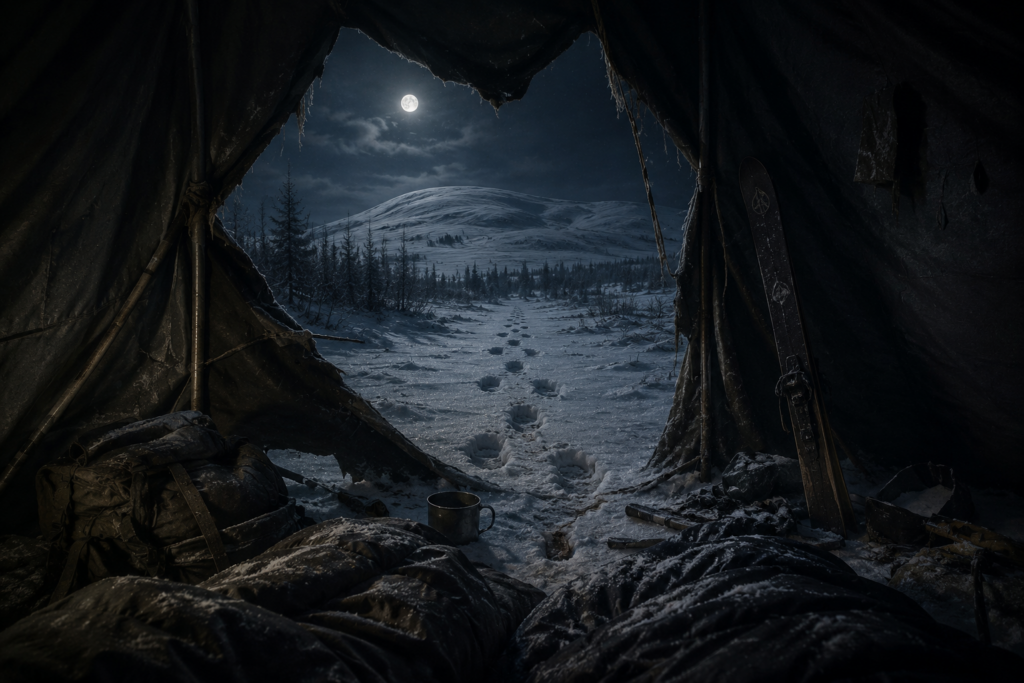
Within minutes, the tent was sliced open—not from the outside, but from the inside. Even though the main exit was clear, they chose to slash through the thick fabric to escape. This means only one thing: they were so deeply terrified that they could not afford to lose even a single second.
They ran into the pitch black.
Some forgot their boots. Some were just in their socks. Others rushed out in nothing but their underwear.
Think about it. In $-30^\circ\text{C}$ weather, a human being cannot survive without shoes for more than a few minutes. What kind of terror could be so absolute that it forced seasoned survivalists to sprint barefoot into a freezing blizzard? This single fact turns the incident from a tragedy into a haunting mystery.
The footprints found later showed they weren’t running like blind, panicked animals. They were walking in a relatively orderly, fast pace toward the forest below. It was a controlled retreat. It was as if they were deliberately moving away from something specific.
The Grim Discoveries
Down by the tree line, the horror unfolded.
The first two bodies were found near a large cedar tree, dressed only in their underwear. Their fingers were raw and bloody, buried deep into the snow, as if they had tried to claw themselves into the earth for warmth. The lower branches of the tree were snapped. Investigators guessed they tried to climb the tree to look back at their tent. But the height at which the branches were broken was far above a normal human’s reach. It seemed their desperation had given them superhuman strength.
Further up the slope, three more bodies were found, including Igor Dyatlov. Their bodies were stiff, faces frozen in expressions of pure shock. They died facing the direction of the tent, as if they were trying to crawl back to safety before the cold finally took them.
But the most disturbing discoveries were made months later, deep inside a nearby ravine where the remaining four hikers lay buried under the snow.
Among them was twenty-one-year-old Lyudmila Dubinina. Her body was a nightmare:
- Her tongue was completely missing.
- Her eyes were gone.
- Her chest was crushed, with multiple ribs fractured.
Yet, strangely, there were almost no external cuts or bruises on her skin. The autopsy report stated that the internal trauma was so massive it looked like the result of a high-speed car crash. But there were no cars, no other humans, and no signs of a physical fight.
There was only the snow. And the silence.
Ghost, Spies of Science
Over the decades, wild rumors flooded the world. Many claimed it was a paranormal attack by a local mythical monster. Others believed it was a secret Soviet military experiment gone wrong, or even a UFO encounter. Interestingly, on that very night, villagers living miles away reported seeing strange orange spheres glowing in the night sky. Even today, old military documents mention these mysterious glowing orbs.
But science offers an explanation that is, in many ways, far more terrifying than ghosts.
Modern researchers believe the culprit might have been infrasound. When fierce winds rush over dome-shaped mountains like Kholat Syakhl, they can create low-frequency sound waves. The human ear cannot hear these waves, but the human body feels them. Infrasound triggers instant, overwhelming anxiety, intense panic, hallucinations, and a feeling of doom.
Picture the scene:
It is pitch dark. A blizzard is roaring outside. Suddenly, a minor avalanche cracks above the tent. Simultaneously, the infrasound waves hit their brains, causing an artificial, uncontrollable terror. They truly believed the entire mountain was collapsing on them.
They ripped the tent, ran for their lives, and stepped right into the arms of death.
The Cold Reality
Once you are out in the open, the Arctic cold doesn’t kill you instantly. It plays with your mind. It slowly steals your body heat, slowing down your brain. You become confused.
In the final stages of severe hypothermia, a strange phenomenon occurs called paradoxical undressing. The freezing brain misfires, making the victim feel burning hot. Believing they are on fire, they strip off their clothes. This explains why some were found half-naked.
But what about the crushed bones and missing eyes?
Swiss scientists recently used advanced computer simulations to prove that a sudden, heavy block of icy snow sliding onto the tent could easily crush human ribs without tearing the skin—much like an airbag hitting a passenger in a car. As for the missing tongues and eyes? They were likely the tragic result of local wildlife scavengers finding the bodies weeks later in the damp ravine.
A Unkwown Compelling Force
The scientific theories make sense on paper, but the mystery refuses to die.
If there was a heavy avalanche, why were the hikers’ footprints preserved so clearly for weeks? Why were the signs of an avalanche so minimal when rescuers arrived? Why would such an experienced crew camp on a dangerous, open slope instead of taking shelter in the forest just a kilometer away?
And most heartbreakingly… why couldn’t they make it back?
The positions of the bodies show they did try to return. But in the blinding darkness, with broken bones and failing minds, the mountain simply erased their paths.
When the Soviet government closed the case in 1959, their official conclusion was incredibly brief and mysterious. They stated the hikers died due to “an unknown compelling force.”
Even the government didn’t have a clear answer. Or perhaps, they didn’t want to give one.
Ultimately, Dyatlov Pass is not famous because of monsters or aliens. It remains famous because nine intelligent, highly trained, and tough individuals were driven to such absolute madness by fear that they chose to freeze to death rather than stay inside their tent.
And that is the most haunting truth of all. When nature turns against you, all human experience and logic melt away into the snow.